Why Smart Event Organizers Are Offering Lead Retrieval as a Paid Add-On
As exhibitor budgets tighten and event costs rise, raising booth prices is no longer a sustainable growth strategy. This post explains why outcome-driven add-ons—especially lead retrieval—are becoming the smartest way for organizers to increase revenue, protect exhibitor trust, and build long-term event profitability through aligned incentives and revenue sharing.
Event organizers are feeling the squeeze.
Costs are up across the board—venues, labor, AV, freight, technology, staffing. At the same time, exhibitors are watching their budgets more closely than ever. They’re still investing in events, but they’re investing differently. Every line item has to earn its keep.
That’s why more organizers are rethinking a common assumption:
To increase revenue, you have to raise prices.
In practice, raising booth fees or increasing sponsorship tiers often creates the opposite outcome. Exhibitors downsize. They cut upgrades. They skip the show. And the event loses momentum over time.
The smarter approach is becoming clear across the industry: grow revenue by choosing high-value, outcome-driven tools—the kinds of things exhibitors actually want because they directly improve results.
One of the best examples is lead retrieval.
Lead retrieval isn’t a “nice to have.” It’s how exhibitors prove ROI, justify spend, and follow up effectively after the show. And when it’s offered the right way, it becomes one of the cleanest ways for organizers to increase event revenue without touching booth prices.
In this article, we’ll break down why lead retrieval works so well as a paid add-on, what organizers often get wrong, and how EventStack’s Fetch Revenue Share Program helps events turn exhibitor lead retrieval purchases into a sustainable revenue stream.
The Real Reason Exhibitors Cut Back (and What Organizers Get Wrong)
Exhibitors don’t usually reduce spend because they don’t believe in events. They cut back because the math stops working.
Think about how exhibitors approach booth programs. If you’ve ever watched a team plan an exhibit build, you’ve probably seen a familiar pattern: the budget gets eaten up by decisions that feel exciting in the moment but don’t actually move outcomes. Fancy tech. Over-designed features. Add-ons that look impressive but don’t increase qualified conversations.
The exhibitor version of this mistake is “buying stuff instead of building a strategy.”
Organizers can fall into the same trap.
It’s common to see exhibitor packages built around a checklist:
Logo placement
A certain number of badges
A booth size
A sponsorship label
Some vague exposure promise
But what exhibitors really care about is:
Can we meet the right people?
Can we capture the right leads?
Can we follow up fast enough to convert them?
Can we prove results internally?
When organizer packages don’t connect to outcomes, exhibitors become skeptical. And once skepticism sets in, price increases feel like punishment rather than value.
The lesson: revenue grows when you make it easy for exhibitors to invest in things that clearly improve performance.
Why Add-Ons Beat Price Increases Every Time
Raising booth prices is blunt. It hits everyone the same way—even exhibitors who don’t need more, don’t want more, or can’t justify more. That creates friction.
Add-ons work differently.
They create a value ladder: exhibitors who want a baseline presence can stay in the base package, and exhibitors who want more ROI can opt into paid upgrades that help them perform.
The best add-ons share a few traits:
Optional (no resentment) Exhibitors choose it. That choice changes the entire emotional tone of the purchase.
Outcome-driven (easy to justify) “This helps us capture more leads” is easier to defend than “we got a larger logo.”
Low friction (easy to buy) Simple pricing, simple checkout, and clear instructions.
Low operational burden (easy to use) If it adds complexity onsite, it won’t scale—no matter how good it is.
Measurable (proves value after the event) The best add-ons produce data: usage, results, and reporting.
Lead retrieval checks every box—when it’s packaged and implemented correctly.
Lead Retrieval Is the Most Natural Paid Add-On in Trade Shows
If you’re deciding what to offer as a paid exhibitor add-on, you’re looking for something that’s already tied to exhibitor success.
Lead retrieval is one of the few purchases that can be clearly connected to ROI.
It solves a real exhibitor pain
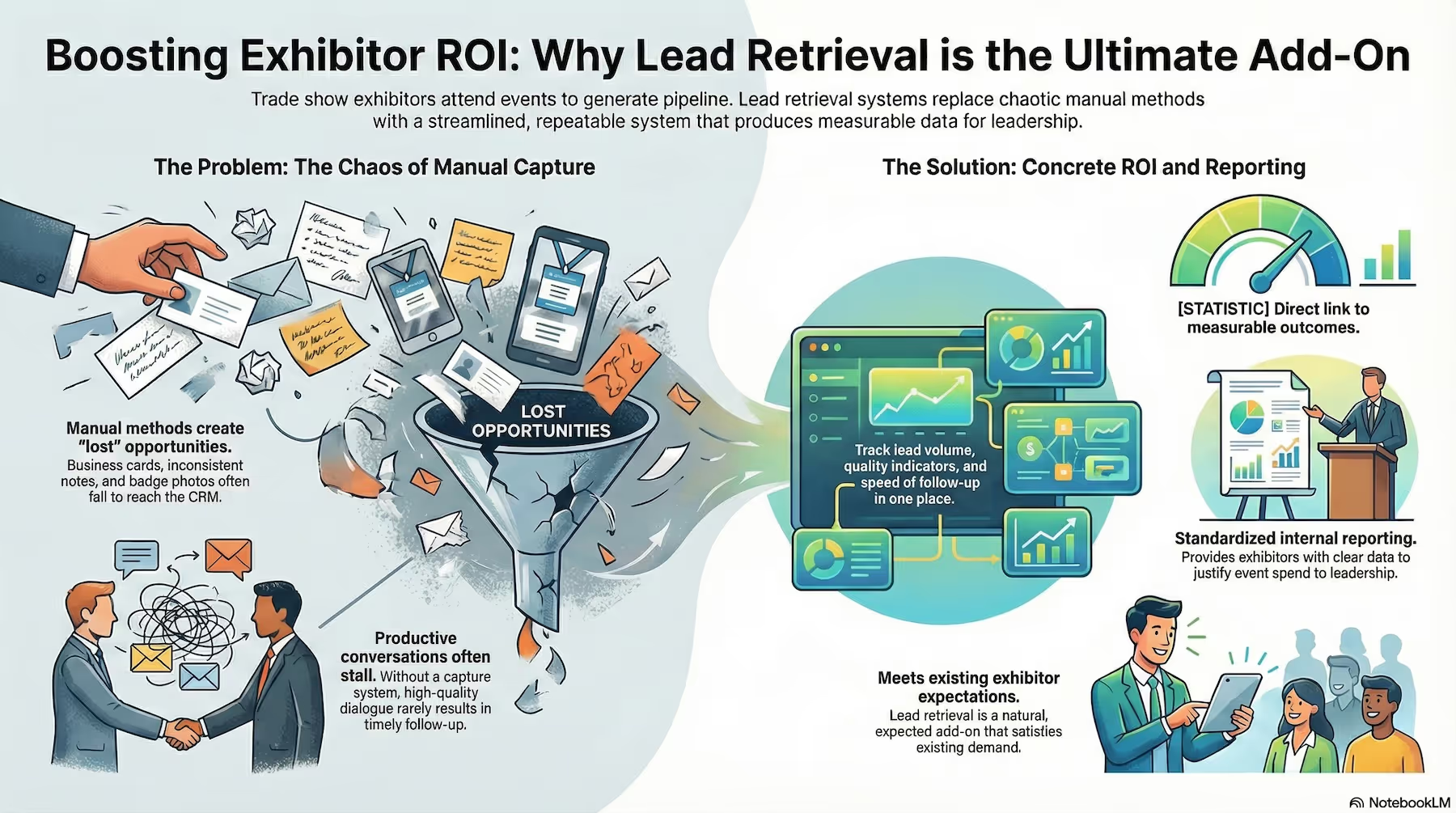
Exhibitors don’t attend events to “get exposure.” They attend to generate pipeline. And pipeline starts with lead capture.
Without lead retrieval, many exhibitors rely on:
Business cards that get lost
Manual note-taking that’s inconsistent
Badge photos that never get entered into a CRM
Conversations that feel productive but don’t turn into follow-up
A lead retrieval tool reduces that chaos and creates a repeatable system.
It’s directly linked to measurable results
A lead retrieval purchase isn’t abstract. It produces concrete outcomes:
Number of leads captured
Quality indicators (notes, tags, qualifiers)
Speed of follow-up
Internal reporting for leadership
It’s a tool exhibitors can point to after the show and say, “Here’s what we got.”
It’s already expected behavior
In many industries, exhibitors show up assuming there will be a lead capture option. The question isn’t whether they need it. The question is whether the official option is straightforward, fairly priced, and easy to use.
If you don’t provide a good solution, exhibitors will still solve the problem—but often with workarounds that reduce the event’s ability to standardize, support, and improve outcomes.
That’s why lead retrieval is such a strong add-on category: the demand already exists.
The Old Way of Selling Lead Retrieval Creates Friction
If lead retrieval is such a clear win, why do some events struggle to sell it?
Because it’s often positioned and packaged in ways that feel frustrating or unclear.
Common mistakes include:
Confusing tiers and unclear pricing
When exhibitors can’t understand what they’re buying in 30 seconds, they delay the decision or skip it.
Clunky tech and lack of training
If the app is difficult or onboarding is unclear, exhibitors get burned once and never buy again.
No transparency or reporting
If exhibitors don’t get usable data—or don’t know what they’ll receive—they assume it won’t be worth it.
This is the same underlying issue as booth budget busters: buying things without a clear plan. Lead retrieval shouldn’t feel like a tax. It should feel like a professional advantage.
The Better Model: Offer Lead Retrieval as a Paid Add-On and Share the Upside
Here’s the shift smart organizers are making:
Instead of treating lead retrieval as a cost center—or a pass-through service—they treat it as:
A value add that improves exhibitor ROI
An optional upgrade that creates a clean monetization path
A measurable product that supports renewals and trust
This is the same thinking used in other modern event monetization strategies:
Content libraries (monetizing what you already produced)
Data products (monetizing insight and outcomes)
Lead retrieval belongs in that same category. It’s an outcome-driven tool that exhibitors want, and it’s a place where organizers can increase revenue without raising base prices.
Spotlight: EventStack’s Fetch Revenue Share Program (10–15% Back to the Event)
This is exactly why Executivevents built Fetch, the lead retrieval solution within EventStack—and why the Fetch Revenue Share Program exists.
What Fetch is
Fetch is EventStack’s lead retrieval tool designed to make exhibitor lead capture simple, reliable, and fast. The goal is to support exhibitors with a professional experience that translates into better follow-up and measurable ROI.
How the Revenue Share works
The model is straightforward:
The organizer offers Fetch as the official lead retrieval add-on for the event
Exhibitors purchase Fetch licenses (based on their needs)
The event earns a 10–15% revenue share on every license sold
The result is powerful: every exhibitor lead retrieval purchase becomes new revenue for the event.
No booth price increases. No new sponsorship category required. No awkward “we had to raise rates this year” conversations.
Just a clean revenue stream tied directly to exhibitor success.
Why this is a win-win structure
This model works because it aligns incentives:
Exhibitors buy something that improves performance
Organizers generate revenue when exhibitors invest in ROI tools
The event experience improves because follow-up and engagement improve
And importantly: it’s optional and transparent. That’s what preserves trust.
How to Position Lead Retrieval So Exhibitors Actually Buy It
Offering lead retrieval is one thing. Selling it well—without backlash—is another.
Here’s what works.
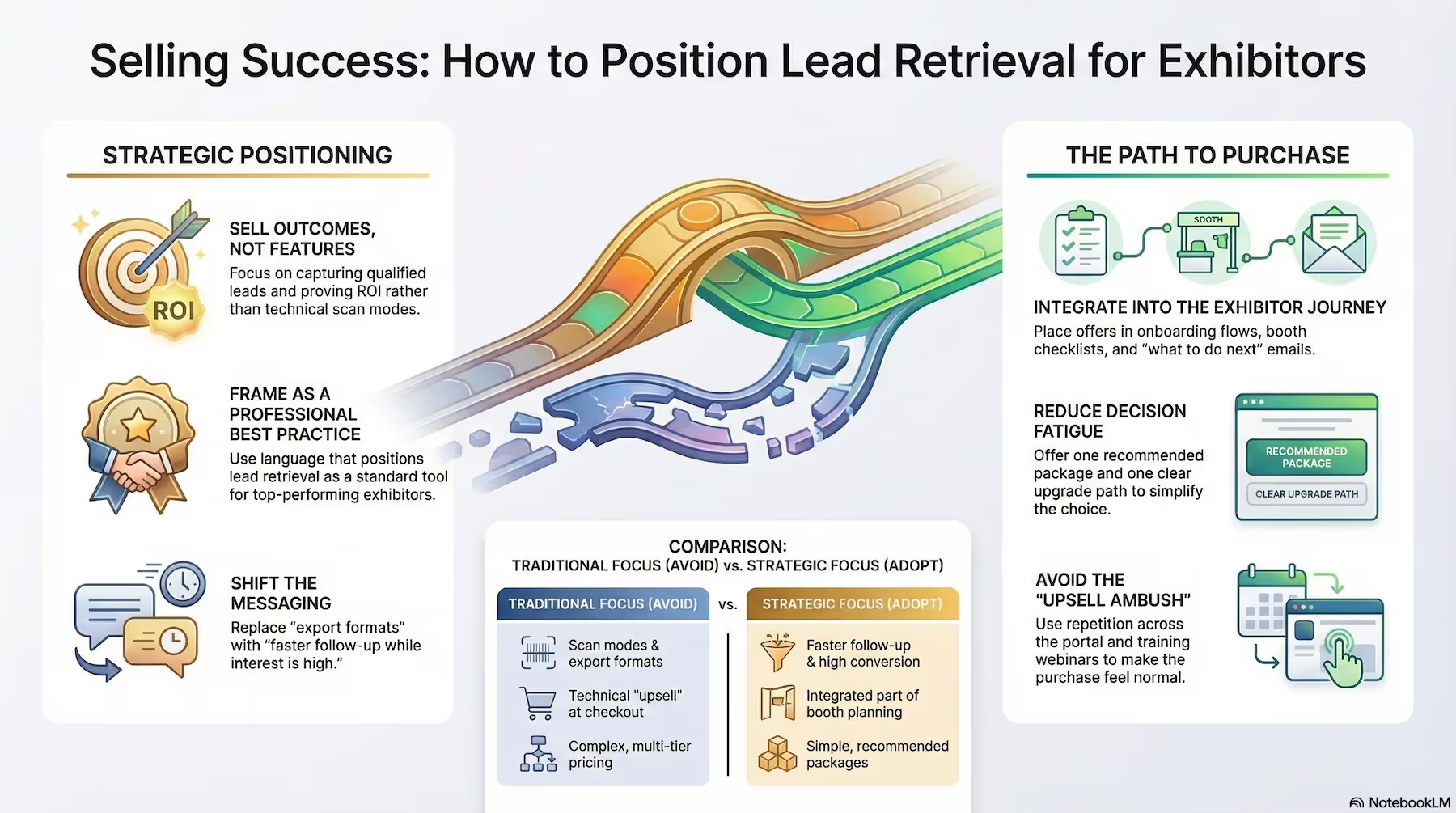
Sell outcomes, not features
Exhibitors don’t care about “scan modes” and “export formats” until after they buy.
They care about results. Position lead retrieval like this:
Capture more qualified leads with less effort
Follow up faster while interest is high
Prove ROI to leadership with clean reporting
Leave with a usable list—not a pile of notes
When the value is framed as outcomes, the purchase becomes easier to justify.
Put it in the right places in the exhibitor journey
Most lead retrieval sales are won or lost based on timing and repetition. Don’t mention it once and hope it sells.
Place it across:
Exhibitor onboarding flows
The exhibitor portal
Booth planning checklists
Pre-show training webinars
“What to do next” emails after booth selection
The goal is to make it feel like a normal part of preparing for success—not an upsell ambush.
Reduce decision fatigue
If you offer ten options, most exhibitors choose none.
A better approach:
One recommended package for most exhibitors
One upgrade path for teams that need multiple devices/users
Simple comparisons that focus on use cases, not features
When buying is simple, adoption rises.
Make it feel professional
Some exhibitors are new. Some are seasoned. But most want to look like they know what they’re doing.
Language that helps:
“Top-performing exhibitors use lead retrieval to hit meeting goals.”
“Make sure your team leaves with clean lead data—no manual entry.”
“Improve follow-up speed and conversion after the show.”
This reframes the purchase as a best practice.
Best Practices to Increase Adoption (and Revenue Share) Without Backlash
If you want lead retrieval to become a reliable add-on revenue stream, implementation matters. Here are the practices that protect exhibitor goodwill.
Be transparent about pricing
Post the pricing clearly. Avoid “contact us for a quote.” Exhibitors want quick answers.
Offer a quick-start guide and short training video
Most exhibitor teams don’t want training—they want confidence. A 60–90 second video can do more than a long PDF.
Provide onsite support (or a clear help channel)
If an exhibitor has a problem onsite, they need a fast solution. Support reduces frustration and increases renewal likelihood.
Send a post-event summary
The best way to ensure exhibitors buy again is to prove value after the show:
total leads captured
exports completed
team usage
notes/tags captured
Even a simple summary makes the tool feel worth it.
Quick Revenue Math: What This Can Add to Your Event Revenue
Lead retrieval revenue share becomes meaningful when you view it across adoption scenarios.
12% revenue share That’s ~$1,680 back to the event.
Mid-size show
150 exhibitors
70% adoption
$350 average license
12% revenue share That’s ~$4,410 back to the event.
Large show
500 exhibitors
75% adoption
$350 average license
12% revenue share That’s ~$15,750 back to the event.
And that’s before you factor in multi-license teams, upgrades, and year-over-year growth as adoption becomes standard.
Even if the numbers vary by show, the takeaway holds: it’s incremental revenue you don’t have to fight for by raising prices.
The Bigger Strategy: Add-Ons That Build Trust, Not Resentment
The best events aren’t built on extracting more money from exhibitors. They’re built on helping exhibitors succeed.
Paid add-ons work when they’re aligned with outcomes:
They improve performance
They feel optional
They’re easy to adopt
They’re measurable
Lead retrieval is the cleanest example of that model because it sits at the intersection of exhibitor ROI and organizer revenue.
When exhibitors leave the show with better data and better follow-up, they renew more often. They invest more confidently. And your event becomes more resilient.
Final Thoughts: Lead Retrieval Isn’t a Fee — It’s a Growth Lever
If you’ve been looking for a way to increase event revenue without raising booth prices, lead retrieval as a paid add-on is one of the highest-leverage moves you can make.
It’s a product exhibitors already want. It’s tied to ROI. And with the right structure, it becomes a recurring revenue stream for the event.
That’s why more organizers are turning to EventStack’s Fetch Revenue Share Program—earning 10–15% back on every Fetch license sold and building a healthier event economy in the process.
Want to see what Fetch revenue share could look like for your event?
Executivevents can walk you through the program, help you plan exhibitor rollout, and show how Fetch can become a reliable revenue stream—without raising prices.
Book a call to unlock the Fetch Revenue Share Program.